
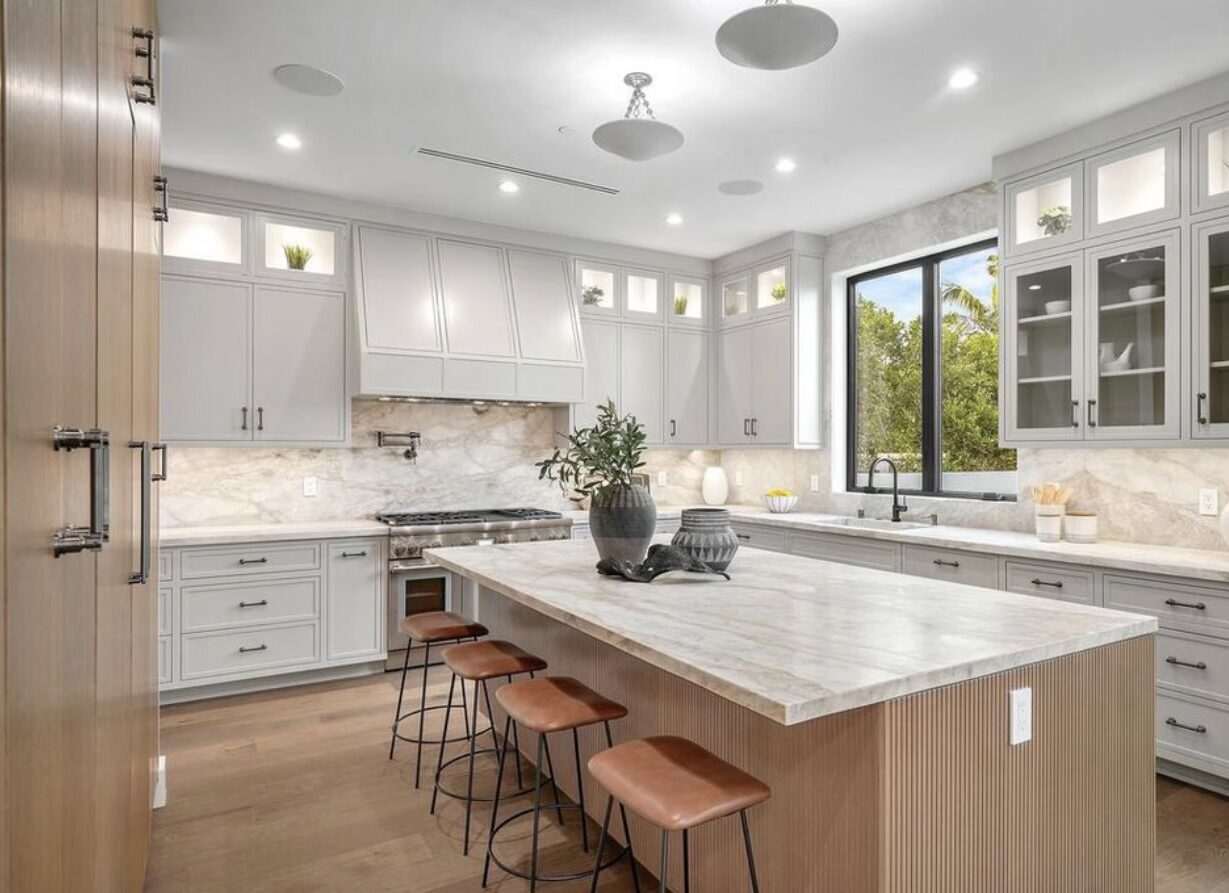
Kitchen Remodeling Costs in Los Angeles in 2023
Researching your kitchen remodeling costs in Los Angeles, CA? The key factors are size, finish level, scope, and services needed. How much should you budget for your kitchen remodel? Here’s how to make a rough prediction of kitchen remodeling costs in LA County.
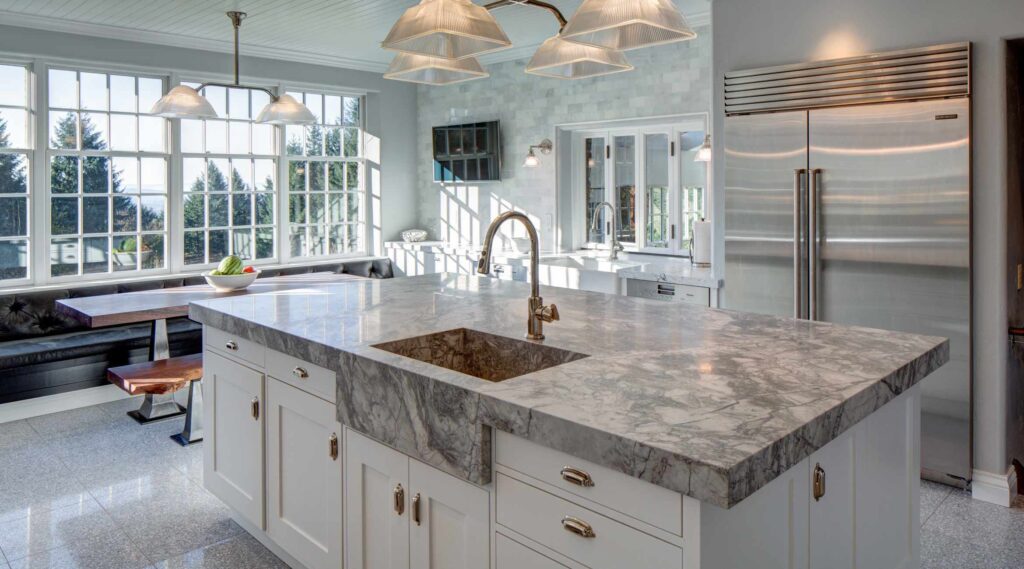
The main variables are:
- Size of your kitchen, typically determined by square footage, and other factors like the number of linear feet of cabinets and countertops you need.
- Finish level — from budget to luxury, of all the materials, fixtures and finishes for your renovation.
- Scope — Are you just replacing fixtures and finishes? Are you changing the floor plan, including moving walls and utilities? Are you adding a new kitchen, or moving your kitchen to a different part of the house?
- Services — Do you just need construction work? Do you need professional design or architecture services?
We’ll discuss these variables below, but for now let’s start with an example.
For a full renovation (without layout changes) of a medium-sized kitchen, with basic general contracting services, here’s what you can expect starting costs for your project to look like in Dallas:
- Budget kitchen renovation costs: Starting at $23,500
- Mid-grade kitchen renovation costs: Starting at $36,000
- High-end kitchen renovation costs: Starting at $72,500
We want you to be completely prepared for the cost of your home remodeling project, so our pricing estimates are inclusive of all materials, labor, overhead, and a standard general contractor’s margin.
When you’re ready to get started on your kitchen or home remodel, work with Sweeten to renovate with the best contractors in Los Angeles.
Size: How dimensions affect your kitchen remodeling costs in Los Angeles, CA. This may sound obvious, but the larger your kitchen, generally the more expensive your renovation project will be. However, it’s not a totally straightforward calculation, because what matters most isn’t the footprint, it’s the fixtures and finishes that will fill that space — more cabinetry, countertops, and bigger appliances mean greater costs. Here’s how you can think about sizing up your kitchen remodeling project:
Extra small kitchens are usually “kitchenettes” with mini appliances and limited cabinets. They are usually less than 60 sqft, and best for simple food prep. Typical appliances in an extra small kitchen include an under-counter or narrow refrigerator, and a small stove or cooktop.
Small kitchens often have a narrow galley or efficient corner layout. Small kitchens are usually about 60-90 sqft, and best for 1 cook. Typical appliances in a small kitchen include a narrow upright refrigerator, a four-burner range, and a microwave.
Medium kitchens are sometimes “L” or “U” shaped, and may have an island or peninsula. Medium kitchens are usually about 90-120 sqft, and comfortable for 1-2 cooks. Typical appliances in a medium kitchen include an upright refrigerator, a four-burner range, a dishwasher and a microwave.
Large kitchens are full-sized with ample cabinet space or a pantry, usually an island or peninsula, and may have some space to eat-in or hang out. Large kitchens are usually 120-200 sqft, and comfortable for 2 cooks, plus company. Typical appliances in a large kitchen include a wide upright refrigerator, six-burner range or cooktop and separate oven, a dishwasher, microwave, and maybe even a wine refrigerator.
Extra large kitchens are generous, full-sized kitchens with a pantry or larder, and almost always have space to eat-in or hang out. Extra large kitchens are usually more than 200 sqft, and comfortable for cooking with the whole family or a group of friends. Typical appliances in an extra large kitchen include a wide upright refrigerator, six-burner range or cooktop, multiple ovens, multiple dishwashers, a microwave and a wine refrigerator.